Why GenAI Usage Didn't Spike on Black Friday 2025
December 11, 2025
UK GenAI data reveals Black Friday didn't increase AI productivity usage as expected.
Learn morePublished March 17, 2026
Examines how AI Overview ads are reshaping search and identifies which merchants are winning AI ad visibility.
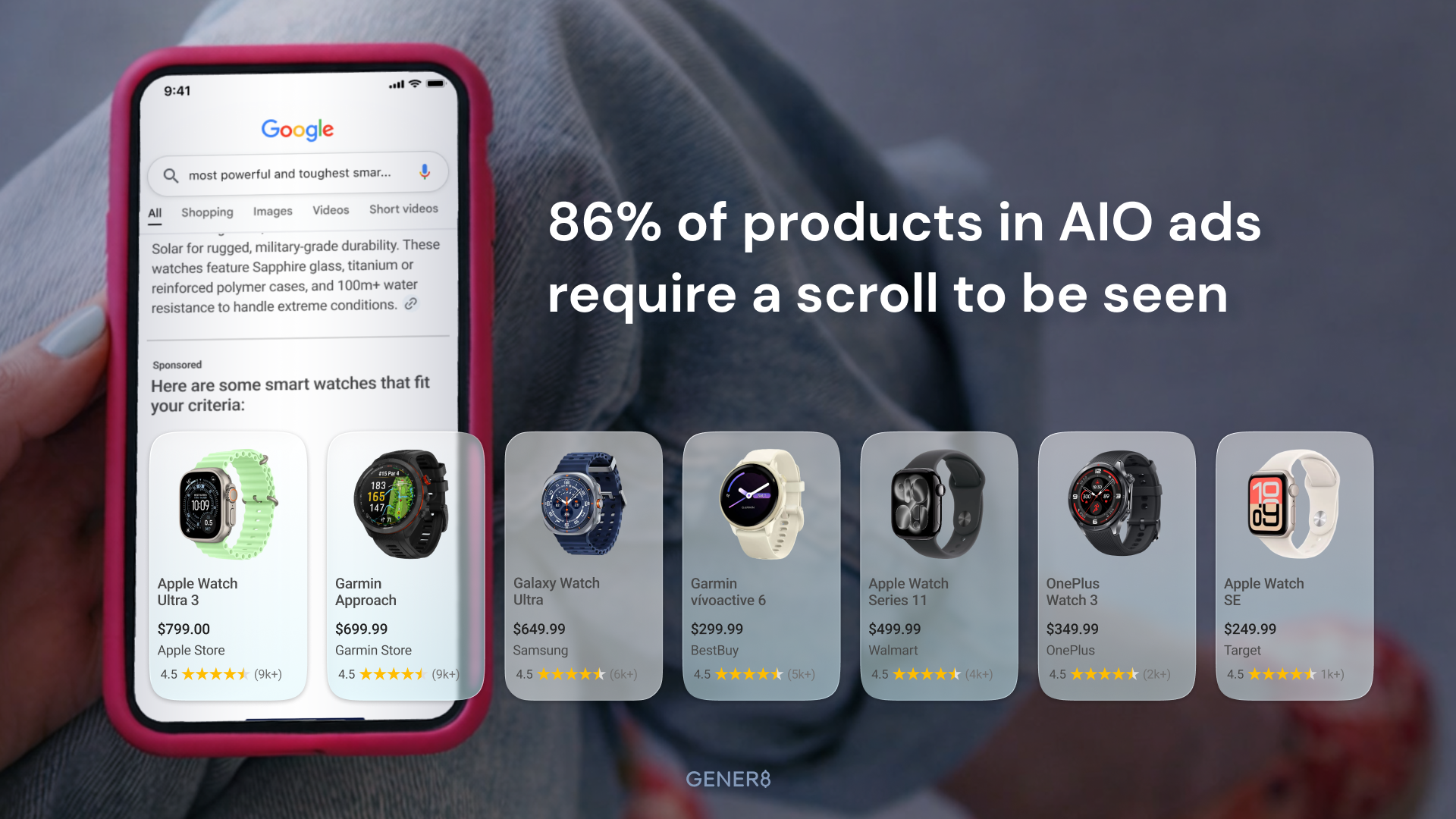
2026 is shaping up to be the year of the AI ad. As Google folds commerce directly into AI Overviews, the search results page is quietly being rebuilt around a new unit: the AI Overview ad. For merchants and marketers, understanding how these placements work, and who is winning visibility inside them, is becoming as important as understanding organic search ever was.
A Google AI Overview ad is a sponsored product placement that appears inside the AI-generated summary at the top of a search results page, rather than in the traditional ad slots above or beside organic results. Products surface as a horizontally scrolling carousel embedded directly in the AI answer, blurring the line between what the model is recommending and what a brand has paid to appear.
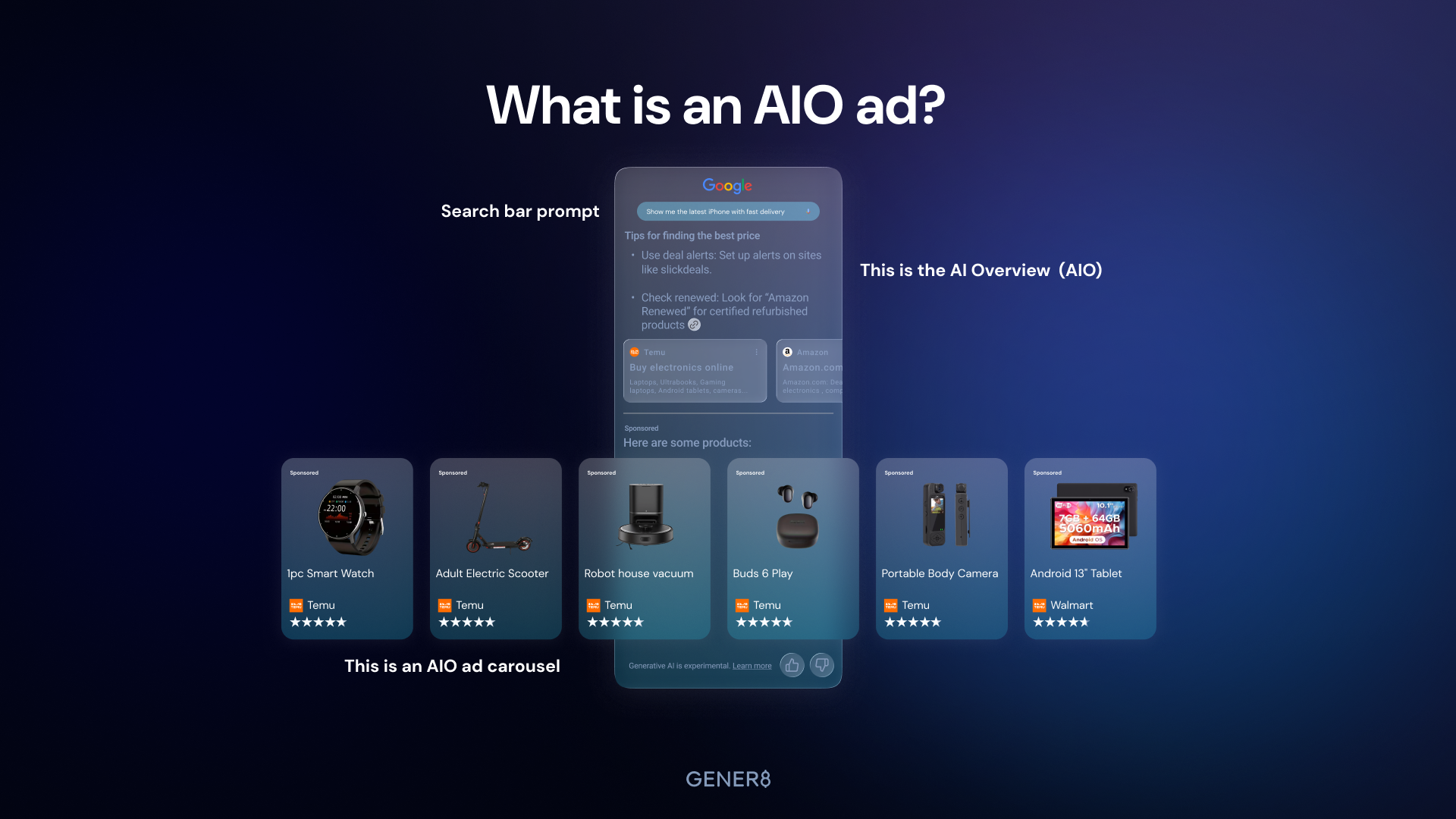
Our panel data shows AI Overview ad penetration accelerating sharply since the start of the year, with the format moving from a small-scale test to a default feature across a widening set of commercial queries. The growth curve mirrors, and in places outpaces, the early rollout of AI Overviews themselves.
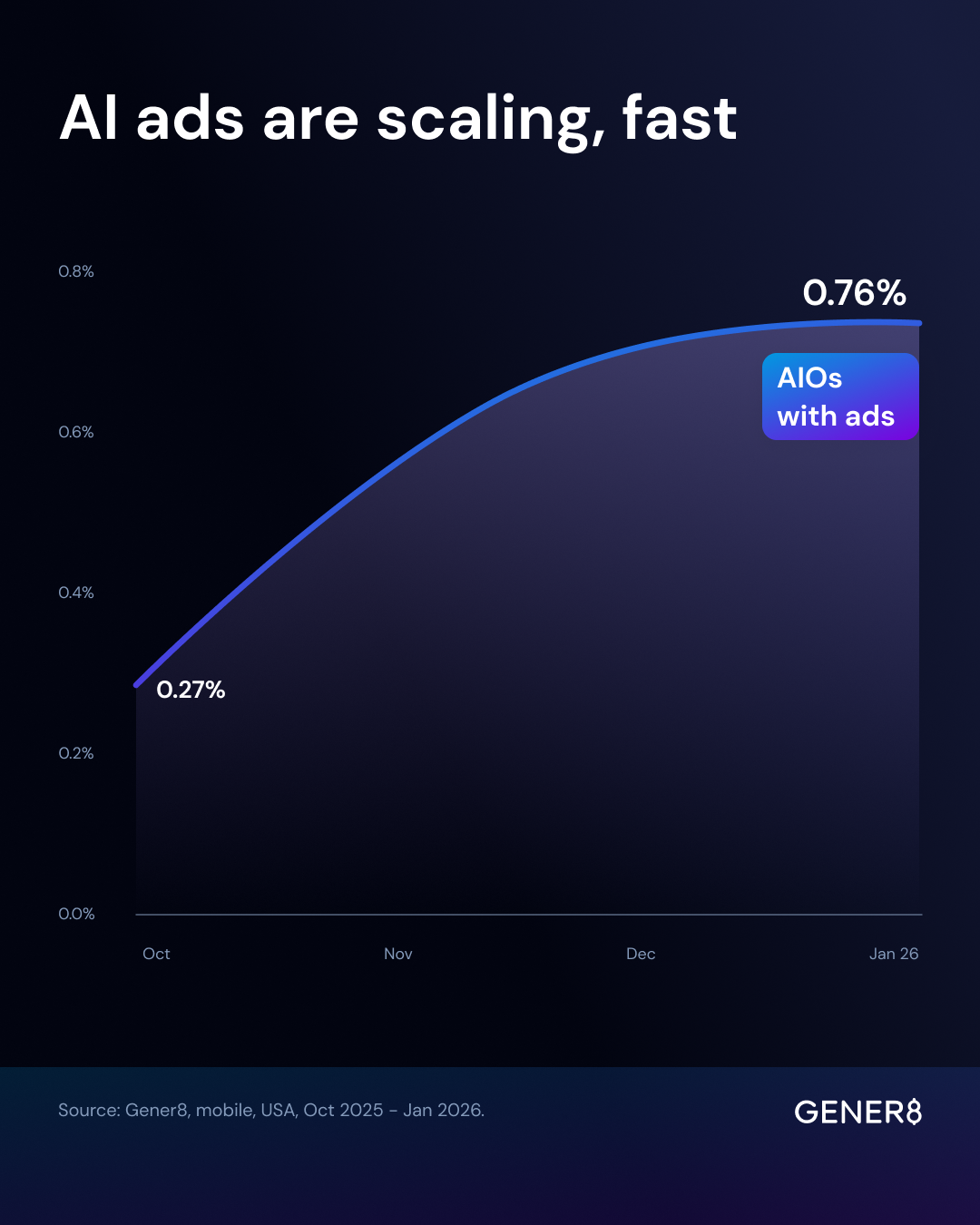
That concentration means the gap between merchants who have cracked AI Overview ad visibility and everyone else is widening fast: early movers are compounding an advantage that latecomers will find increasingly hard to close.
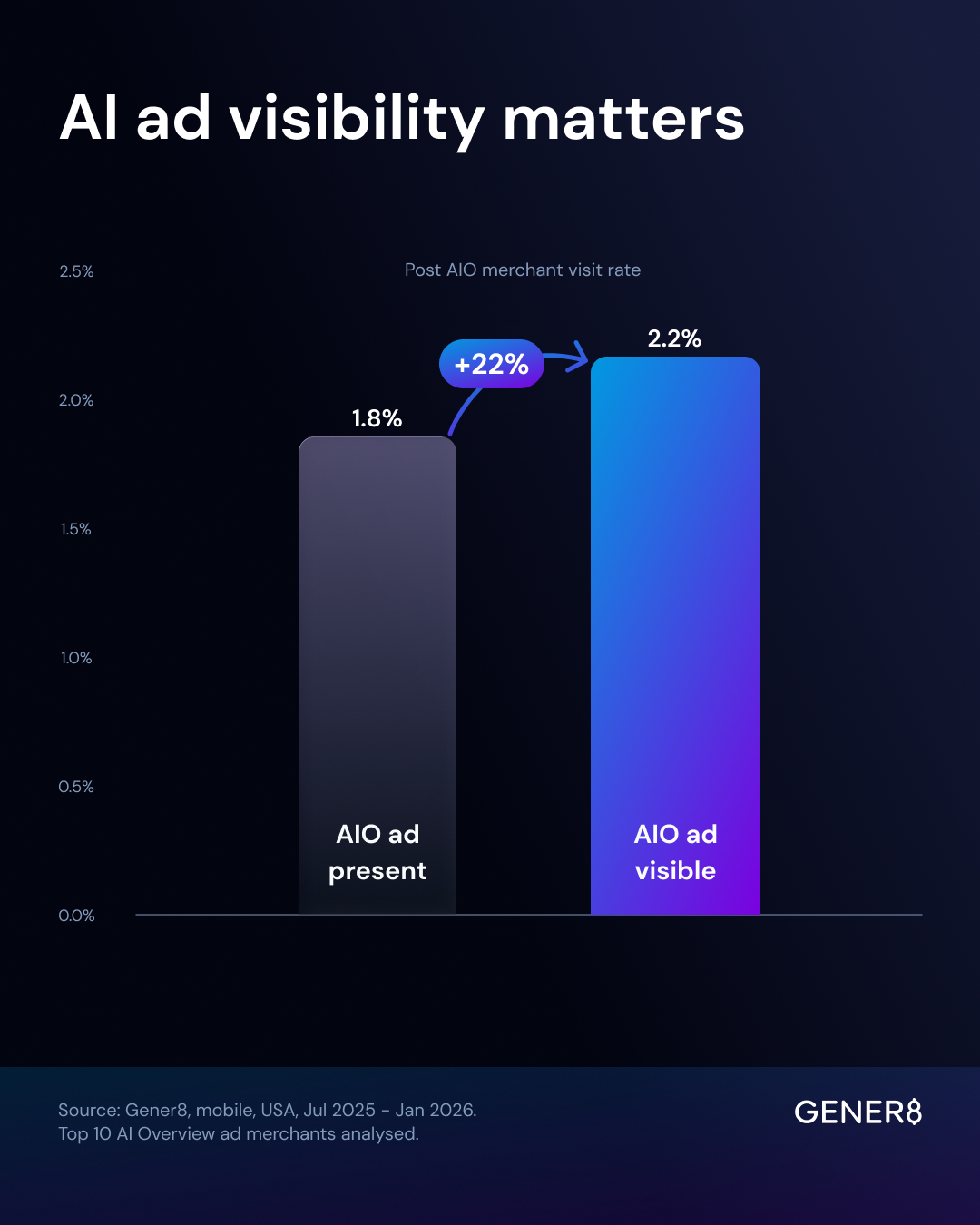
Three factors stand out in what reliably triggers an AI Overview ad to appear: query commercial intent, product feed quality and completeness, and historical engagement signals tied to the merchant's existing Shopping presence. Brands that treat their product feed as a first-class input, not an afterthought, are the ones showing up.